


CAMPAIGN STATUS: Launched DECISION HOLDER: City, County, EP Water, PUCT.
NO DATA CENTERS IN OUR DESERT
Data Centers are a threat to local economies, utility prices and the environment. Nowhere is that more obvious than in working-class border communities in the desert like El Paso, Texas.
In December of 2023, the City, County, and El Paso Water Utilities (EPWU) entered into
agreements with META (aka Wurldwide LLC), to build a 1,039 acre data center in Northeast El Paso
(US54 and Stan Roberts).


El Pasoans cannot afford the META data center’s drain on our energy and water resources.
El Paso Electric submitted an application to the Public Utility Commission of Texas for permission to set up 813 generators that will run on natural gas and will serve META for up to 5 years. One of our members is an Intervenor. We submitted more technical comments as Prostestors that you can read below (May and June 2026).
Thank you to US Congresswoman Veronica Escobar, State Representatives Mary Gonzalez (Dist. 75) and Vince Perez (Dist. 77), and County Commissioners Iliana Holguin (Pct. 1) and David Stout (Pct. 2) for sending letters at our request. Thank you to everyone who helped us submit over 1100 individual comments. The SOAH judges heard the case on July 8th and will issue a recommendation. The Commission will then make a decision before December.
Click to download
Comments.
June 26, 2026
May 18, 2026
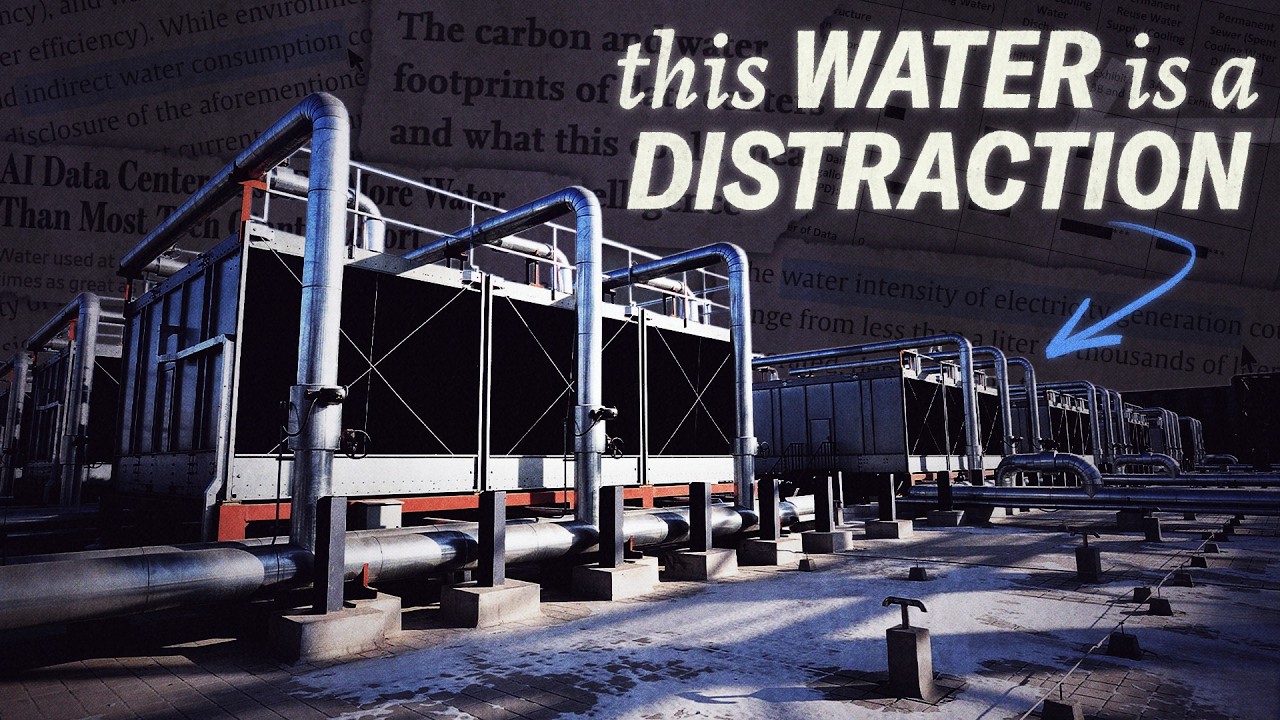
This video explains why we decided to get involved in fighting the application for the McCloud generators.

Learn more about this campaign:
-
META will affect our water in at least 4 ways
What is the issue?
In December of 2023, the City and County entered into agreements with META (aka Wurldwide LLC), to build a 1,039 acre data center in Northeast El Paso (US54 and Stan Roberts).1 The Borderplex Alliance brought the data center even though communities throughout the world and the U.S. are fighting to shut them down.
Why does it matter?
Data Centers are a threat to all local economies and the environment. Nowhere is that more obvious than in working-class border communities in the desert Southwest like El Paso, Texas. Despite local leaders promising to hold META’s feet to the fire, the billionaire-owned company is not legally obligated to deliver for the people of El Paso. We reviewed the contracts closely and there is little we can do to force META to save water and electricity, and produce good paying jobs.
Who decides and where?
The City and County have to vote to end their contract with META. El Paso Water Utilities has a draft contract, but they told us they have not voted on the contract or signed it. We will be asking the City and the County to end their contracts. Each will have to place the item on their agenda and take a vote.
What can we do?
Read our META data center guide.
Let us know if your neighborhood association or other groups would like to sign onto our guide.
Stay tuned.
Stop the META Data Center opening in Northeast El Paso
META, formerly known as Facebook, is moving forward with the construction of a massive data center in Northeast El Paso.
META claims the data center will recycle water, create many jobs, use small and comprehensible amounts of gas and electricity, and fails to acknowledge the environmental and financial harm data centers bring to communities.
We cannot trust META. The City of El Paso, El Paso County, and El Paso Water Utilities (EPWU) entered into agreements with the over $1.6 trillion-worth technology company. However, Facebook and META have been accused and sued multiple times by U.S. government entities for violating consumer protection, privacy, antitrust, and civil rights laws, and for negatively impacting people by the masses.
Data centers claim to stimulate local economies and be located in spaces where communities stay unharmed, but current legal feuds, public evidence, and news show that data centers don't benefit communites; in fact, they consume large amounts of water, create more water, air, and noise pollution, raise utilies for residents to accomodate infrastructure to support the magnitude of power consumed.
It’s NOT in the contract
META’s Data Center in El Paso, Texas, is not obligated to protect local residents from water scarcity, environmental harm, or rising utility bills. To the contrary, El Pasoans will be subsidizing one of the richest companies in the world.
If we let it, the META Data Center in El Paso will consume our hard-earned water and electricity, while polluting our air, creating noise, devastating our desert, and taking tens of millions of our tax dollars in tax incentives - while giving us very little in return, possibly for a very little amount of time. Allowing META to build will open the door to other data centers. The Sembrando Esperanza Coalition has created this memo. Please note that the memo will be updated as more information becomes available.
In December of 2023, the City, County, and El Paso Water Utilities (EPWU) entered into agreements with META (aka Wurldwide LLC), to build a 1,039-acre1,039 acre data center in Northeast El Paso (US54 and Stan Roberts). The Borderplex Alliance brought the data center even though communities throughout the world and the U.S. are fighting to shut them down.
More Perfect Union documented how the residents of a Georgia town were left almost waterless and with high levels of pollution in their documentary "I Live 400 Yards From Mark Zuckerberg’s Massive Data Center."

META is a threat to our water
META will affect our water in at least 4 ways:
1. By consuming drinkable water directly to cool down servers.
2. By consuming water indirectly through its use of non-renewable electricity.
3. By using anti-corrosion chemicals for data center cooling, including PFAS, which often contaminate the water used for cooling, removing it fully from the water cycle.
4. Covering desert land that helps recharge our groundwater sources when it rains.
What is in the contract between the City of El Paso and META?
META has promised to use a limited amount of water and to invest in renewable energy, but it is not obligated to.
In October of 2025, County Commissioner Ricardo Samaniego said the County intends to “hold [META’s] feet to the fire” when it comes to what “they have said about contribut[ing] to energy conservation.” However, as any lawyer knows, verbal promises of this magnitude are not enforceable.
In fact, the contract between the City and META, states that “[t]he City acknowledges that the Company is exploring (but shall not be obligated to pursue) options to use alternative energy sources.”
The County’s contract does not mention:
-
Water conservation at all
-
A requirement to mitigate air pollution
-
A requirement to mitigate noise pollution
-
A requirement to mitigate energy use
-
A requirement to mitigate water use
-
The impact on our natural environment
To the contrary, we are obligated to provide:
-
“Uninterrupted service” of drinkable water
-
Maintain the infrastructure that provides water in good condition at our own expense
-
Pay META’s damages if we are unable to comply

The META Data Center in
El Paso will cover 1039 acres, nearly 2.5 times the size of UTEP, with impermeable concrete.
How much water will the META Data Center use?
META has promised to use a limited amount of water and to invest in renewable energy, but it is not obligated to.
Per the written contract between our publicly owned EPWU, during the construction phase, we are obligated to provide at least 300,000 gallons of water per day for at least 2 years after META begins construction for the first tier/phase.
El Paso will be obligated to provide the following amounts of water per day:
Tier 1: 300,000 cumulative gallons or 100,000 average gallons per day.
Tier 2: 1,000,000 cumulative gallons or 750,000 average gallons per day.
Tier 3: 2,500,000 cumulative gallons or 1,500,000 average gallons per day.
El Paso is obligated to accept wastewater in the following amounts per day:
Tier 1: 150,000 cumulative gallons or 50,000 average gallons per day.
Tier 2: 500,000 cumulative gallons or 375,000 average gallons per day.
Tier 3: 1,250,000 cumulative gallons or 750,000 average gallons per day.
We are also obligated to provide 2,500 gallons of water per minute for at least 120 minutes in the event of a fire.

META’s electricity usage will consume water and increase air pollution
How much power will the META Data Center use?
META will use electricity generated by the privately owned El Paso Electric (EPE). Neither META nor (EPE) have made public any contract between them. However, EPE has stated that “As a regulated utility, El Paso Electric is obligated to provide service to any customer moving to our service region.”
EPE will provide the following amount of power for META to build its massive data center:
Tier 1: About 220 megawatts of power supplied by EPE’s existing power sources, or enough electricity to power more than 100,000 El Paso homes*.
*According to a mid-October 2025 statement by EPE’s chief executive officer, Kelly Tomblin.
Tier 2: Will require 220 megawatts from a gas-fired power plant to be built on the META site and paid for by META.
Tier 3: 1 gigawatt or 1,000 megawatts of power.
This is enough energy to power a city the size of San Francisco, California, for a day, and would make it one of the largest planned data center campuses in the country, according to the El Paso Times.
Most of EPE’s electricity comes from fossil fuels and nuclear energy, both which require a lot of water. EPE uses about 19 million gallons of water per day, making it EPWU’s largest customer. Unless the META data center uses 100% renewable energy directly their consumption of electricity from EPE will also consume our water while polluting our air and directly impacting environmental justice neighborhoods next to the power stations in Montana Vista and Chaparral, NM.
Again, verbal agreements of this size are not enforceable. If META does decide to finance solar energy projects in our community, to truly offset its air emissions and water consumption, the solar energy would have to replace existing gas-fired turbines, like at the Montana and Newman plants. Otherwise, we will still see a huge increase in emissions and water usage and new solar projects that may have happened anyway.
Data center energy demands are also increasing electricity prices for residents in many parts of the country, and Texas’s already troubled electric grid would face further strain from the huge energy use required by this project.

Why is a data center being built in El Paso, Texas?
El Pasoans know that water is sacred and expensive
Our home, the desert, has an average rainfall of less than 9 inches per year. Since 1991, El Pasoans have made huge personal and financial sacrifices to avoid running out of water. Operating under the belief that customers are “relatively unresponsive to small increases in the price of water,” EPWU has increased rates every year for over a decade. These increases have resulted in a dip in gallons used per customer per day and a steady increase in revenue that exceeds the water billed.
As customers, we have continued to save water and pay higher prices because we keep getting told that our sacrifices have not been enough. According to the Texas Water Board and the Texas Tribune, if no strategies are implemented and we are faced with a drought, El Paso will not be able to meet the demand for municipal water by 2040. Despite accepting the sale of its land to META and its water-guzzling data center, EPWU admits that we do not have enough water.
To justify the Spring 2025 rate increase, EPWU’s President John Balliew said that “just forecasting a very slight population increase decade by decade, when you get to about (the year) 2070, 2080, we need the equivalent of another Rio Grande to supply the water needs of the city." A few months later, on November 20, 2025, EPWU announced yet another rate increase and during his presentation to the public, Balliew argued that higher water prices will increase conservation. Balliew stated that “[W]hen water is conserved, we don’t have to produce it so our supplies last longer.
When customers conserve water, their bills go down. So it’s a win-win.” During that presentation, Balliew went on to say that since the 1970s, there has been a 40% decrease in consumption, largely because higher water bills have incentivized conservation. EPWU wants to decrease residential consumption per person even more.
However, these claims are false. While residential consumers have reduced our consumption, our bills are still going up and we are continuously disincentivized from using water for non-essentials, like green infrastructure and trees. This is not a win-win for us. It is a win for META.
To avoid the shortage of water, EPWU has paid for various strategies using our money and federal grants (which we received because of our proven water scarcity). Desalination (removing salt from water) cost us a $91 million plant (Kay Bailey Hutchison desalination plant) in 2007. The plant was not able to operate fully because of its high energy costs. In fact, desalination is extremely harmful to the environment because it consumes so much energy and it generates salty waste.
Desalinating water is also expensive. In 2023, EPWU reported the cost of an acre foot of groundwater to be $150, compared to $300 for surface water from the Rio Grande, and $500 for desalinated water. In October 2025, the utility’s own estimates suggest an acre-foot of groundwater costs the utility an estimated $250 to produce, compared to $340 from the Rio Grande, and $500 for desalinated water.
As of May 2022, EPWU had spent over $222 million dollars buying land in Dell City so that we could own the water rights beneath. However, we still can’t use it. Importing this water and building another desalination plant so that we can actually use it is estimated to cost us another $889 million.
Another strategy, turning sewage or poop into drinkable water is costing us $300 million (Pure Water Center). In addition, EPWU has spent our money to buy people’s irrigation canal rights which has contributed to the loss of tens of thousands of trees in environmental justice neighborhoods in South El Paso, contributing to rising temperatures.
Delays in maintenance resulted in EPWU diverting more than 1.1 billion gallons of untreated sewage into the Rio Grande (one of our sources of water), due to corroded pipelines between August 2021 and January 2022. Why weren’t our dollars used to prevent this? Why are our dollars being used to provide water to billionaires instead?

A Misleading $800 Million Investment
The Wurldwide project, known publicly as the META Data Center, is being promoted as a major economic opportunity for El Paso, yet a close examination of both the City’s 380 Economic Development Agreement and the County’s Tax Abatement Agreement shows that the community will receive very little while the corporation gains enormous long-term financial benefits. Both agreements highlight an $800 million dollar investment, but this number is misleading because META is only required to prove that it spent that amount once.
Per the written agreements, the company is not required to invest any additional money after meeting that initial threshold. It can take years to reach this amount or it can reach it quickly and once META shows proof of the first $800 million dollars, it is still entitled to receive tax breaks for many years, even if it never adds new jobs and never generates any additional economic activity. Neither agreement requires yearly investment, ongoing growth or additional phases of construction.
Only 50 Low-Wage Jobs
In return for these enormous public subsidies, per the City and County contracts, META is only required to provide 50 full-time jobs total, despite the City and the County stating that a total of 100 full-time jobs will be created. The tax abatement agreements could be interpreted to require a total of 50 jobs only. Also, this is not 50 jobs per building and not 50 jobs per tier/phase. It is 50 jobs for the entire project, even though the site covers more than 1,039 acres. For a project of this size, 50 jobs is an extremely low return and is fewer jobs than a single grocery store.
Even more concerning, these jobs are not guaranteed for El Paso residents. The “goal”, not requirement, is for META to hire “regional residents”, defined as living within 50 miles of the data center. They can be as far away as Las Cruces, NM. The definition of a “regional resident” is mentioned only in the County’s tax abatement agreement which has a goal that 25 of the 50 jobs be for regional residents. META alone decides whether local applicants are “qualified.” Failing to hire regional residents is not a default because this is not a requirement.
META is required to pay the Annual Area Median Wage, which is defined by the agreements as the Annual Area Median County Wage to be no less than the 2022 median hourly wage of $16.43, which multiplied by 2,080 hours is only $34,173 per year. Neither tax abatement agreement requires a certain number of construction jobs or salaries. As for health care, META is required only to use good faith efforts to provide health insurance access.
The Real Cost of the $800 Million Investment
When the $800 million dollar investment is analyzed more closely, the economic picture becomes clear. If META invests this amount once and the obligation period spans a typical 10 to 15 year development and abatement timeline, the actual annual level of required investment averages between $53 million and $80 million dollars per year. This level of investment is small when compared with the enormous tax abatements, public infrastructure funding and long-term financial incentives the company receives. META gains significant public benefits that far outweigh its obligations, while El Paso taxpayers carry the burden.